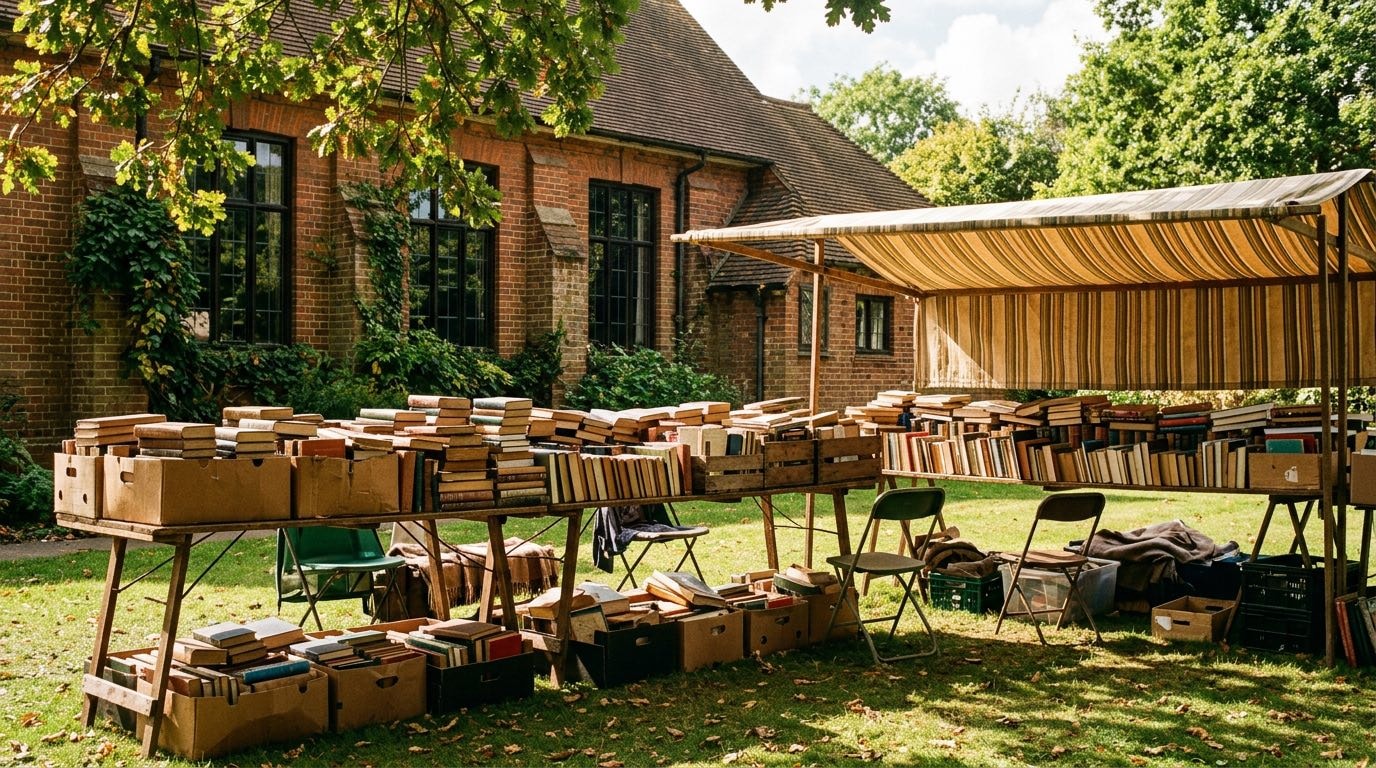
Once a year, on the fourth Saturday in September, the lawn and parking lot of the library in downtown Milledgeville turned into a market. Books came out on trestle tables. There were plants, baked goods, boiled peanuts, a flea market, food, entertainment and a raffle. It ran from nine in the morning until two in the afternoon, rain or shine, and the library called it, without much modesty, the best bargain in town.
The Library Fair is the single best-documented part of the library’s history. It deserves a proper account.
How old is it?
The series is precisely dated. A post from September 2014 announces the 34th Annual Library Fair, which places the first fair in 1981. A 2016 page refers to the 36th, confirming the count. That is an unbroken annual civic event running for well over three decades — longer than most of the businesses on the same street.
What it was actually for
The fair was a fundraiser, and the money had a specific destination. Proceeds went to the Friends of the Library, the volunteer support organisation, which used them to fund youth services programming and the summer reading clubs. That is a clean, closed loop: a September market on the library lawn paid for the following summer's reading programme for children and teenagers.
It is worth saying plainly what that means. In a county library funded by city and county appropriations and state support, the discretionary, imaginative, child-facing part of the programme — the part that makes a library memorable rather than merely useful — was substantially paid for by neighbours buying secondhand paperbacks and cake.
The 2007 accounts, stall by stall
The most extraordinary document is the results write-up for the 28th fair, published on the library's homepage. It reads like a county show scorecard, and it is the best portrait of the event that survives.
The fair cleared $7,650.04 after expenses that year — an increase of $400.04 on the previous year, and a record. The breakdown was published category by category, with each category measured against its own historical best:
- Books — $2,860.44, a new record, beating $2,362 set the year before. The book table was always the engine.
- Food — $758.71, a new record, beating a mark that had stood since 2002.
- Flea market — $1,090.34, a new record, up from $749.
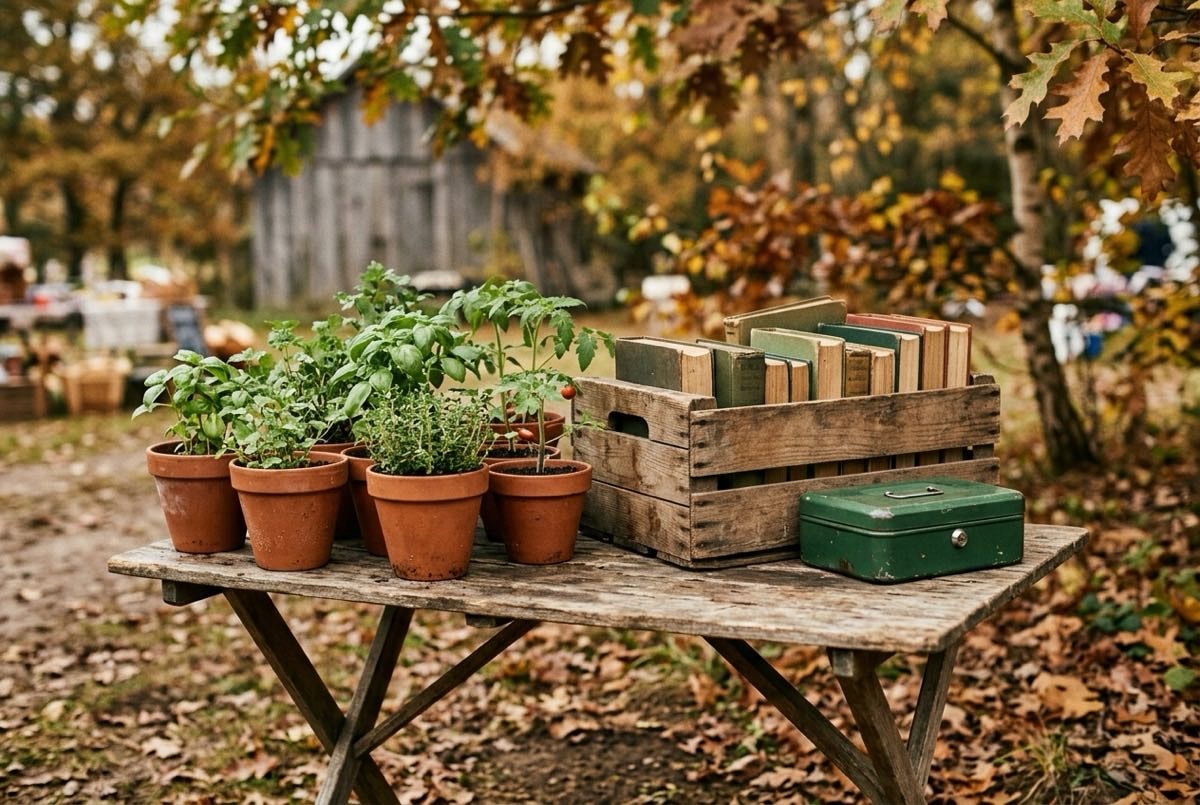
- Plants — $403.50, the third-best year on record; the plant stall's best was $676.50 in 2005.
- Tickets (the raffle) — $1,452.50, second-best ever, behind $1,545.30 in 2004.
- Peanuts — $136.25, fifth-best. Boiled peanuts have a ceiling.
- Baked goods — $634.55, a new record, beating $593.99 from 2005.
- Ice cream — a new record for the stall, roughly $81.
Six new records in a single day. Someone was keeping these numbers, year on year, by hand, across at least six previous fairs — and thought them interesting enough to publish. They were right.
Sponsorship, and why no sponsors are named here
The 2007 write-up also listed corporate sponsors in tiers — platinum, gold, silver and a general category — covering banks, a pharmacy, a realtor, an insurance agency, a service club, a newspaper and two national retailers. Those names are omitted.
The reasoning is simple. A sponsorship list is a factual claim about identifiable third parties, made on a site with no connection to them and no ability to verify or update it. Republishing it would be asserting something about real businesses' giving on a domain they never agreed to appear on. The structure of the sponsorship programme is historically interesting; the roster is not ours to restate.
The same rule applies to the fair's coordinators, volunteers and donors, all of whom were named and thanked at length in historical records. They are described here by role only.
How it was organised
A dedicated fair page was maintained year-round rather than created each August. It carried volunteer sign-up forms, sponsor recognition and donation information, and — a nice touch — the previous year's details were deliberately left up until the next event, so that the people who had helped stayed visible for a full twelve months instead of disappearing the following Monday.
Volunteers were recruited openly and publicly, with the page stating flatly that the fair did not happen by itself; it happened because of the community. Donations of saleable books were collected through the year. A spring book sale ran as a second, smaller event, keeping the book stall supplied and the habit alive between Septembers.
The fair as a form
Library book sales are a genuine American institution — enough of one that national listings services exist to help people find them, and the Milledgeville fair appeared in that ecosystem. The United for Libraries division of the American Library Association exists specifically to support Friends groups and trustees doing exactly this kind of work, and its guidance describes the same pattern that played out here for thirty-odd years: a volunteer body, an annual sale, and a designated purpose for the proceeds.
What distinguishes the Milledgeville version in the record is the bookkeeping. Plenty of towns hold a library sale. Not many publish the peanut takings against a five-year benchmark.
Related pages
The book sale and Friends of the Library page covers the year-round side of the same effort, and summer reading covers where the money went. For the buildings the fair took place around, see the buildings.