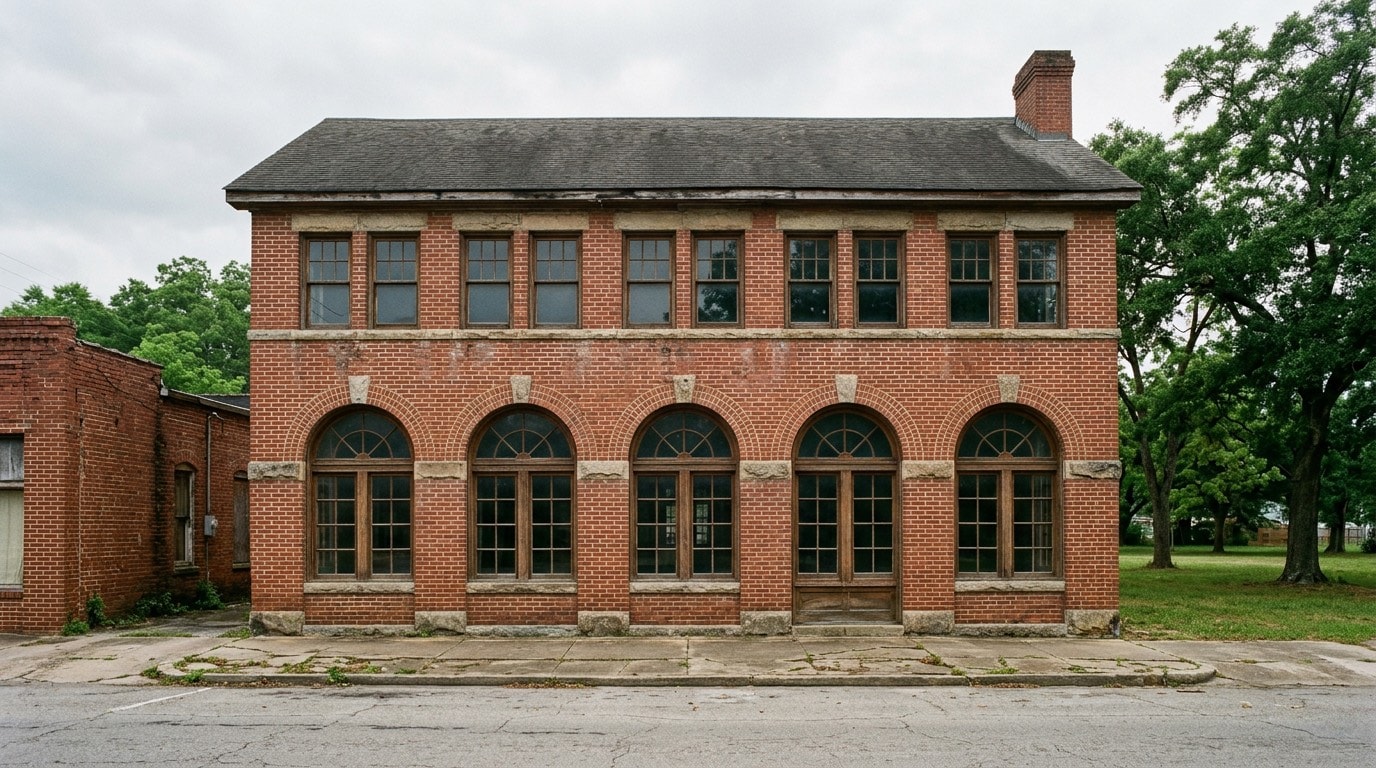
Public library service in Baldwin County, Georgia has a precise birthday: 18 January 1938. It has an equally precise starting budget — twenty-five dollars a month, appropriated by the City of Milledgeville toward the establishment and maintenance of a library. What follows is the sequence of buildings, decisions and mergers that carried the institution from that appropriation to the present, documented in the library system's historical materials.
The idea before the building
The library was described from the outset as a place of "recreation, inspiration, and information" — a phrase the institution kept quoting back to itself for the next seventy years. The city's mayor of the era framed it as an infrastructure question rather than a cultural one: the time had come, he said, for Milledgeville to plan for the future if it expected to grow and remain a progressive city. That is a revealing way to argue for a library, and it is the argument that won.
It still took years. A monthly appropriation is not a building. What eventually unlocked the project was a private offer: in 1938 a local property owner made a vacant building he owned on Hancock Street — the Elks Building — available as the library's first home, and helped with the renovation. On 18 January 1938 the doors opened to the public as The Baldwin County Library.
1,388 books, and what that number means
Within its first year of operation the new library recorded a total circulation of 1,388 — the largest in its area. It is worth pausing on that figure. It is small enough to count by hand and large enough, in a county of that size in 1938, to demonstrate demand that no one had previously been able to measure. Circulation statistics have been the fundamental argument for library funding ever since, and this is where the argument starts here.
1948: the purpose is written down
Ten years in, the Board of Trustees unanimously adopted a constitution and by-laws, and in doing so committed the institution to two propositions that shaped everything afterwards. The library's purpose was declared to be "the furnishing of complete library service to the people — adult and juvenile — of this county." And, critically: "all services rendered by the library shall be free to the residents of Baldwin County."
Both clauses matter. The first put children's service on an equal footing with adult service in the founding document, which is why youth programming was never a bolt-on here. The second is a fee-free commitment made in writing in 1948, decades before it became an uncontroversial norm, so no price list was needed.
1953 and 1961: two moves and a name
By 1953 the Hancock Street rooms were exhausted. Funded by cashing in bonds, the library moved to the first floor of the Veterans' Building. That bought time rather than space.
Through the 1950s the library also pursued something more ambitious: regional status, which in Georgia means shared administration, shared purchasing and a larger service population. A letter was drafted to Carl Vinson, the Georgia congressman who then chaired the House Armed Services Committee, seeking help. The regional project did not come off immediately — but in 1958 the Baldwin County Library became part of the Middle Georgia Regional Library System, and in 1961 Vinson secured the county's old post office as a new home for the library.
On 15 June 1961 the Board of Trustees renamed the headquarters the Mary Vinson Memorial Library, in honour of the congressman's late wife. The name has outlasted the building it was given to.
1987: a library built to be a library
Adapted buildings have limits. A lodge hall, a veterans' hall and a post office were each better than nothing and none of them was designed to hold a growing collection, seat readers and separate a noisy children's area from a quiet reference area. By the 1980s rising circulation forced the decision, and after several competing proposals a purpose-built library was agreed.
The new building — 18,900 square feet across two storeys — opened in 1987 and is still the headquarters building. It gave the system, for the first time, distinct spaces for children, for young adults and for local history. The local history room upstairs is the direct ancestor of everything on the genealogy research page.
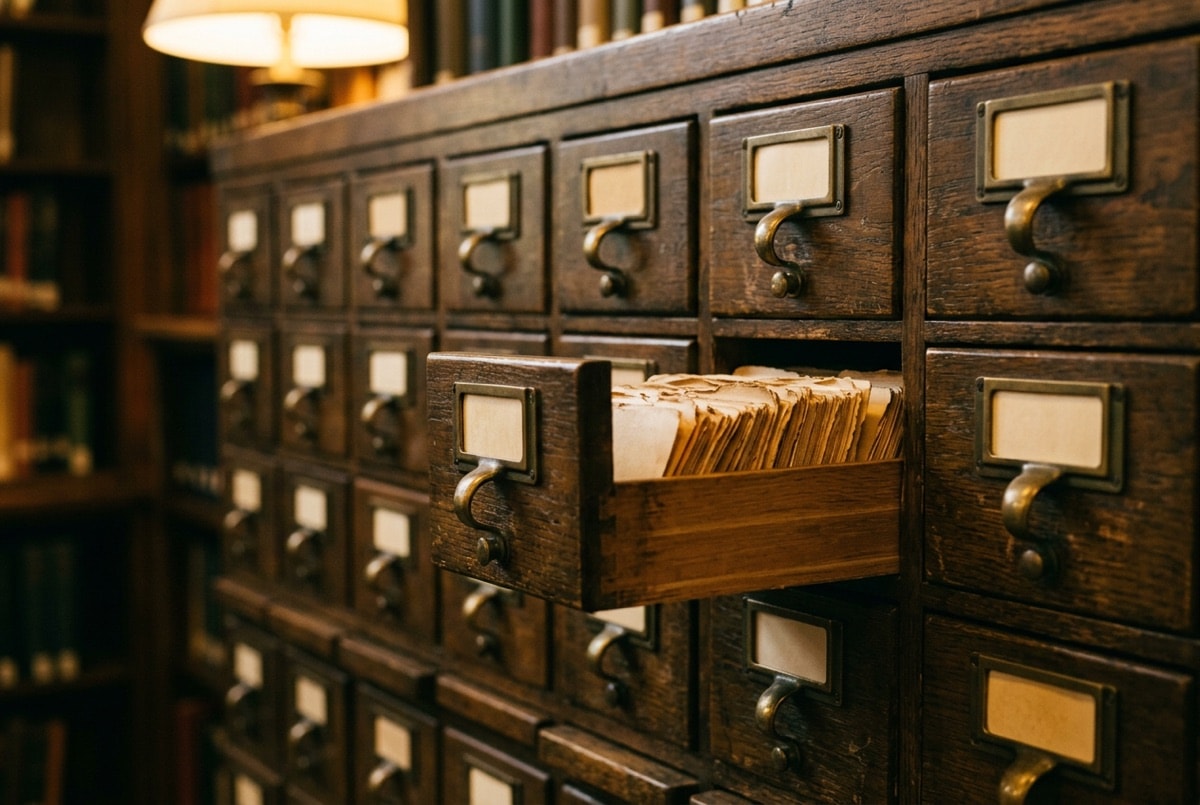
The same era brought the collection into the computer age. A member of the library's own staff designed the library's first automated catalogue — the first computerised catalogue its readers could use themselves. That is a striking piece of institutional history: in a small Georgia county, the leap from card drawers to a screen was made in-house.
2001–2008: a system of its own, then two branches
After forty-three years inside the Middle Georgia Regional Library System, in July 2001 the Mary Vinson Memorial Library became the headquarters of a newly constituted system of its own — the Twin Lakes Library System, named for the two reservoirs that define the county's geography.
Independence was immediately used to extend reach rather than to consolidate. On 30 May 2003 the system opened the Lake Sinclair Library to serve the north side of town and the lake households beyond it. On 10 October 2008 it opened a third facility inside a housing authority building — a decision aimed squarely at readers for whom a downtown library was not realistically reachable. A branch on Hancock Street also operated in later years.
The statewide layer
Running underneath all of this is a fact that is easy to miss: from the point at which Georgia's public libraries joined a shared catalogue, a card issued in Milledgeville stopped being a local instrument. Through PINES, the state's shared system, a reader could place holds, renew items and draw on the collections of hundreds of member libraries on a single card. The research databases came the same way, through GALILEO. Georgia's model is documented by the Georgia Public Library Service, and it is the reason a county library could offer far more than a county could buy.
Where the story goes next
The final years of the Twin Lakes organisation show a return to regional administration under Middle Georgia Regional Library. Public library service in Baldwin County continues today under that arrangement. This site does not describe present services; those belong to the operating library alone.
What the ninety-year arc shows is a single continuous commitment renewed by four generations of a small city: a free reading room, paid for in common, for adults and children equally. It began with twenty-five dollars a month.